


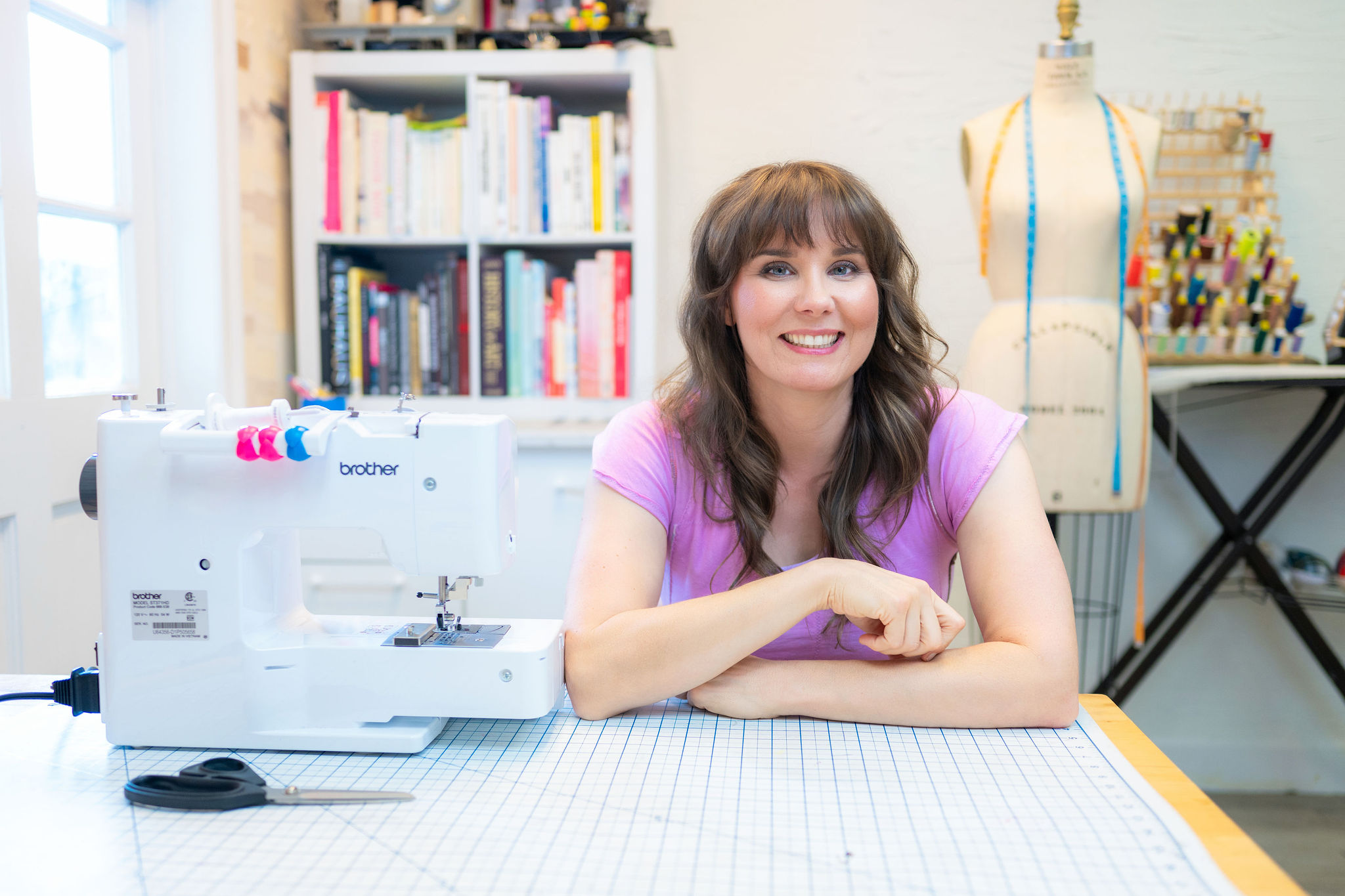
Wardrobe Reconsideration is the practice of reading your existing wardrobe as a record of your life before you decide anything about its future. It is the first step of every wardrobe I design, mine included, and it is the step almost every closet method skips, because it does not look like progress. Nothing leaves the closet. Nothing gets bought. You sit on the floor with your clothes and you listen.
I named it years ago, and I have been asked to explain it properly ever since. This is that explanation: where it came from, what the word means, how the process actually runs, and what you do afterward with what you learn.
Where Wardrobe Reconsideration came from
When I was building Fair Fit Studio, first in Chicago and later in Baton Rouge, people started hiring me to help with their closets. They called it decluttering. I assumed that is what I was being hired for, and I showed up with bags.
What happened in those closets was not decluttering. A client would pull out a dress and go quiet. Then she would tell me where she had worn it, who she had been that year, why she could not put it on now and could not give it away either. The next garment would be one she wore constantly and felt nothing about. The one after that would be a coat from before a diagnosis. We were not organizing textiles. We were moving through a person’s history, in fabric, hanger by hanger. It was closer to therapy with garments than to any tidying method I had read about.
At the School of the Art Institute of Chicago, I had studied the idea of Relational Aesthetics, the argument that a work of art can be the set of human relationships it creates rather than the object itself. Standing in those closets, I realized I was looking at exactly that. A wardrobe is not a collection of objects. It is a system of relationships between a person and the versions of herself she has been. Once I saw it that way, the word “declutter” stopped making sense. You do not declutter a life. You reconsider it.
A closet is a biography that happens to be wearable.
Why the word matters
Language shapes what we are willing to do. “Declutter” assumes the garments are the problem and the goal is fewer of them. “Audit” assumes the goal is a correct inventory. “Edit” assumes you already know what the final version is supposed to look like.
“Reconsider” assumes something different. It assumes every garment carries information, and that the information is worth reading before any decision is made. It also assumes you have changed since you acquired the garment, which is always true, and that the garment is now telling you something about the distance between then and now.
That distance is the whole point. Most closet frustration, the full closet with nothing to wear, the guilt about the unworn pieces, the sense that your clothes belong to someone else, comes from a wardrobe that has not been reconsidered as the person inside it moved on. I wrote about how that feels from the inside in Design Your Dream Wardrobe: Why Your Clothes Stop Feeling Like You. This piece is the method that follows from it.
The four kinds of garments in every closet
The first thing reconsideration does is give you a vocabulary for what you are looking at. In every closet I have ever worked in, the garments fall into four kinds, and being able to name which one you are holding changes how you feel about holding it.
Memory pieces
These are the clothes tied to a version of yourself who felt alive, capable, or seen. The dress from the year everything was going well. The jacket you wore to the interview that changed your life. They may no longer fit the body. They fit the memory perfectly, and that is why they are so hard to move. A memory piece is not clutter. It is a record, and the question it asks is not “do I still wear this” but “what did this version of me have that I want back.”
Resilience pieces
Garments from before something changed shape: before an illness, a loss, a caregiving season, a body that reorganized itself. These often look ordinary to an outsider. To the person who owns them they mark a line in time. People hold onto resilience pieces because letting go can feel like agreeing that the before is over. Reconsidering one is an act of courage, and it should be treated with that much respect.
Pain pieces
Clothes attached to chapters you would rather not revisit. Some people keep these deliberately, as evidence of having survived. Others keep them by accident, because throwing them away means touching them. Either way, a pain piece is doing work in your closet every time you open the door, and part of reconsideration is deciding whether that work is still yours to carry.
Survival pieces
The clothes you reach for daily because they are easy and require nothing of you. Leggings, the soft shirt, the same cardigan. They have no story and no charge. Survival pieces are not bad. During my years as a full time caregiver they were the only thing I wore, and they were correct for that life. The problem is when survival becomes the whole closet by default, not by design, and you look up one day and cannot find yourself in it.
What the four types teach you
Once you can name the type, patterns appear. A closet that is mostly memory pieces belongs to someone who has stopped adding to her life and is dressing from the archive. A closet that is mostly survival pieces belongs to someone in a hard season, or someone who came out of one and never told her wardrobe. A closet with a wall of resilience pieces and almost nothing current usually means a body changed and the person has been waiting to change back before she lets herself be dressed again.
None of these are judgments. They are readings, and a reading is what lets you design. You cannot plan a wardrobe for a person you have not looked at, and most of us have not looked at ourselves in our own closets for years.
How the process works: three passes
Reconsideration runs in three passes through the closet. Each pass has one job. Do them in order, and do not skip to the third because it feels the most productive. The first two are what make the third one honest.
The first pass: listening
Touch every garment. Every one. Take it off the hanger, hold it, and say out loud which of the four kinds it is. Memory, resilience, pain, or survival. If it is none of those, say what it is: “I bought this because a list told me to.” “This was a gift.” “I have no idea.” Those are readings too.
Nothing leaves the closet during the first pass. This is the rule people most want to break and the one that matters most. The moment you start removing, you stop listening, because your attention shifts from what the garment says to whether you are allowed to keep it. Listening takes an hour or two for an average closet. Set aside an afternoon and do it alone, or with one person you trust to be quiet.
The second pass: telling the truth
Now go through again, faster, and sort everything into three piles by its relationship to your life right now. Supportive pieces serve a role you currently live. Nostalgic pieces represent a version of you that mattered, whether or not that version is coming back. Disconnected pieces are nice garments that belong to no role and no story; they are simply in the room.
The second pass is where the four types become useful. Memory and resilience pieces usually land in nostalgic. Survival pieces usually land in supportive, and it is worth noticing if they are the only thing there. Pain pieces can land anywhere, and where you put one tells you what it has become for you.
Be strict about “right now.” Not the life you are planning. Not the body you are working toward. The one that got dressed this morning. If you want a faster way into this pass, the two week pile I describe in Where to Start With Your Wardrobe When You Feel Completely Overwhelmed is the same idea in miniature.
The third pass: reading the design
Lay the supportive pile out where you can see all of it at once. Look at it as a designer would look at a rack. What do these garments share? A color family. A fabric weight. A particular ease through the body. A hem length. A neckline. That shared language is your design language, and you did not choose it from a mood board. You chose it by reaching for it, every day, without thinking.
Then lay out the disconnected pile and ask the same question. What do these share? Very often it is a single pattern of buying: the “investment” piece, the trend, the color someone else said you should wear, the size you hoped to become. That shared pattern is the mistake you keep repeating in stores and on the fabric shelf, and seeing it once is usually enough to stop it.
The supportive pile is your design language. The disconnected pile is your blind spot.
What to do with each pile
Reconsideration ends with three piles and a much clearer head. Here is what happens next for each.
Supportive pieces get repeated and refined. These are the garments you build from. If you sew, the silhouette of your most supportive top is the first block worth drafting, because you already know you will wear it. That is the logic behind the Signature Series: one garment that fits, turned into many. If a supportive piece is close but not quite right, it goes to the alteration pile, and the seven changes I use most are in How to Alter Clothes to Fit Your Body.
Nostalgic pieces get a decision, and not necessarily a fast one. Some stay, deliberately, as memory and not as wardrobe; a garment you keep on purpose in a box is different from one you keep by default on a hanger. Some are made new. A resilience piece cut down into something you can wear now carries the story forward instead of freezing it, and that is exactly the kind of work I teach in the Heirloom Repurpose course. Some are released, and I encourage people to release them with some ceremony. Wear it once more. Photograph it. Say what it was. Then let it go with your whole self, not with guilt.
Disconnected pieces are the easiest, once you have named them. They belong to no role and no story, which means there is nothing to grieve. If one can be altered into a supportive piece, alter it. If not, it leaves, and it takes its lesson with it. That lesson goes into your wardrobe plan so it does not walk back in, and I lay out that plan in How to Plan a Wardrobe Before You Sew or Shop.
Reconsideration for makers: the stash is a closet too
If you sew, run the same three passes on the fabric shelf. You will find the same four kinds. Fabric bought during a season you loved. Fabric bought before a change. Fabric you cannot look at. Fabric you use for everything because it is easy. Unsewn yardage is a memory piece of a future self, and it carries as much charge as any dress.
The supportive fabric pile, the yardage that matches your actual roles and your actual design language, is what you sew from this season. The disconnected pile can go to a friend or a guild sale without a second thought. The nostalgic pile is where I would start a repurposing project, because cutting into precious fabric is its own kind of reconsideration, and I wrote Too Precious to Cut for exactly that hesitation.
A practice, not a purge
The last thing to understand about Wardrobe Reconsideration is that it is not something you do once. Bodies change. Roles change. A garment that was supportive in spring can be nostalgic by autumn, and a nostalgic piece can come back into your life when the life it belonged to returns. I reconsider my own closet at every change of season, and it takes an hour now because I know the vocabulary.
This is the difference between a wardrobe that is designed and a wardrobe that is managed. A managed closet is always slightly behind you. A designed one gets reread and adjusted as you move, which means it never gets far enough behind to feel like a stranger’s.
Where reconsideration leads
Everything I teach about wardrobe design starts here. You cannot define a personal aesthetic without reading your supportive pile. You cannot build a cohesive wardrobe without knowing your design language. You cannot think like a patternmaker about your own clothes until you know which garment is worth drafting from. Reconsideration is the first move, and the rest of the method follows from it.
That method is what my Design Your Dream Wardrobe program is being built to teach in full: reconsideration, the design language, the plan, the blocks, and the finished garments, in order. The waitlist is open and I write to everyone on it personally as the program takes shape. For sewists who want to start building from their supportive pile today, Create a Clothing Collection and the wider Fashion Design curriculum are where that work happens.
Reconsider your wardrobe with me
I still do this with people, the way I did in those first closets, and it is some of the most meaningful work in the studio. In Baton Rouge we sit in your closet. By video, you bring the garments to the camera one at a time and I ask the questions. An hour is usually enough for the first pass and the beginning of the second, and people tell me it changes how they see their closet for good.
Book a wardrobe consultation with me here. If you are not near Louisiana, choose the virtual option.
Your closet already knows who you are. It has been keeping the record the whole time.
Read it.
Frequently asked questions
How is Wardrobe Reconsideration different from a closet declutter?
Decluttering starts from the assumption that you own too much and the goal is less. Reconsideration starts from the assumption that every garment carries information about your life, and the goal is to read it before deciding anything. Nothing leaves during the first pass. Many people end up with fewer garments afterward, but that is a result, not the aim, and the pieces that leave are chosen with a clear head instead of a bag and a deadline.
How long does Wardrobe Reconsideration take?
The first time, plan on an afternoon for an average closet: an hour or two for the listening pass, less for the other two. After that it becomes seasonal maintenance and takes about an hour, because you already know the vocabulary and most of the garments have already been read once.
Do I need to know how to sew to do this?
No. The three passes are about reading a closet, and anyone can do them. Sewing becomes useful afterward, when supportive pieces need altering or nostalgic pieces are worth remaking. If that is the direction you want to go, the Pattern Fit & Alterations Workshop is where the alteration side of the method is taught.
What should I do with pain pieces?
Whatever you decide, decide it on purpose. Some people keep a pain piece boxed as proof of what they came through. Some release it and feel lighter the same day. Some cut it up and make something from it, which can be its own kind of closure. The only wrong answer is leaving it on the hanger by default, where it keeps doing its work every time you open the door.
Online workshop · $35
Design a wardrobe with a point of view
Create a Clothing Collection walks you through building a design vocabulary, editing what you collect, and giving every collection or seasonal wardrobe a story, starting from your own closet.
See the Collection Workshop Not sure where to start? Find your starting point